Analog Systems
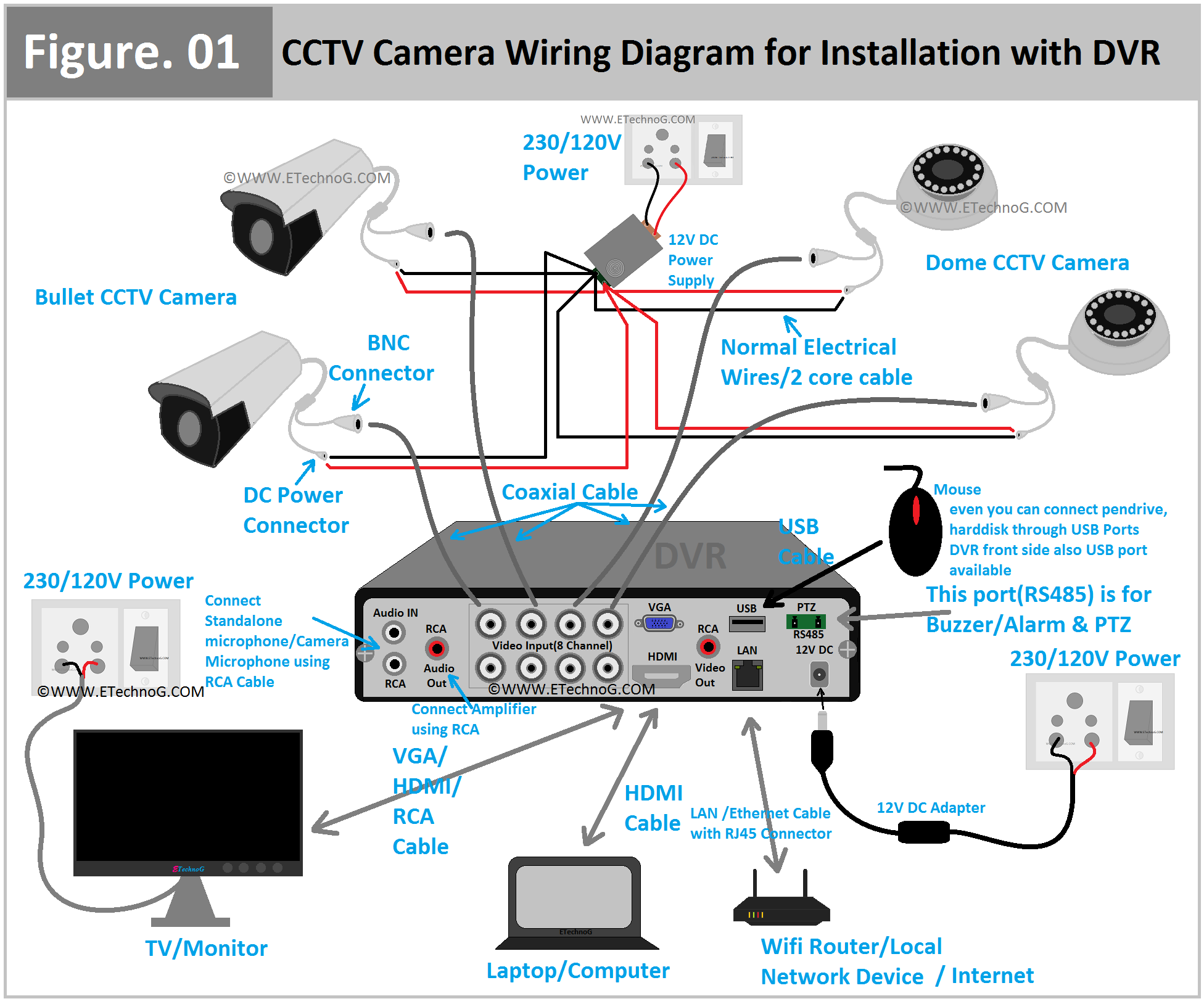
Analog cameras work by transmitting images captured by the camera’s lens along a coaxial cable to a DVR (digital video recorder). The DVR is the device that stores the recording on a hard drive. The DVR converts the analog signal from the camera to a digital file when it is saved. DVRs can be connected to a TV or monitor to view the video recording. However, it is more efficient for a DVR to connect to a router or switch to enable you to watch the recordings through the internet or over a local network.
Analog systems require all cameras to have their feeds transmit through coaxial cable. But this just covers the feed to the recording device, these cameras still need power to function. This will normally be an additional cable wired to a a separate box that is needed to supply the power for the cameras.
Before IP systems gained popularity, analog systems with multiple DVRs were common. For example, one of our clients still uses a multiple-DVR analog system, each with 32 analog cameras attached.

Pro Tip: With the use of a KVM (Keyboard, Video, Mouse) switch a user can swap between the different DVRs to view recorded footage or manage settings.
A VMS (Video Management System) allows multiple analog DVR, IP NVR or Hybrid systems to communicate to a centralized application server to view all available cameras in the system using software instead of a KVM. This is an option that has been utilized as our clients and the industry as a whole swaps over from analog to IP systems. In the following sections you will learn the main advantages of IP systems and why the industry is going that route.
Main components:
Analog cameras: These are the devices that capture the video footage in the form of an analog signal.
Coaxial cable: This is used to transmit the video signal from the analog cameras to the DVR.
Digital video recorder (DVR): This is the device that receives the video signal and converts it into a digital format for storage.
Hard disk drive: This is the storage device used by the DVR to store the digital video footage.
Power supply: Analog cameras require a power source to function, which is usually provided through a separate power supply unit.
Monitor: A TV or monitor is used to view the live or recorded video footage from the DVR.
Multiplexer (optional): A multiplexer can be used to combine the video feeds from multiple cameras into a single signal, which can then be transmitted to the DVR for recording or to a live display for viewing.
Alarm I/O (optional): Analog systems can also be connected to alarms and other sensors to trigger recording or other responses in the system.
Keyboard / Joystick Controller: Allows the operator to switch between cameras in the system as well as move PTZ cameras.

KEY POINTS:
Analog CCTV systems use coaxial cables to transmit analog video signals to a Digital Video Recorder (DVR)
Analog cameras come in different types and were the standard before IP systems.
Analog cameras have lower resolution and image quality.
Analog cameras can be integrated with other security systems as a stop-gap while transitioning to IP.
Analog systems are no longer a viable solution for new installations as the technology is outdated.